

You made the decision. Maybe it took months to get there, maybe it happened faster than you expected once you finally toured a place and knew. Either way, the move happened, and now you’re sitting with a whole new set of worries you didn’t have room for while you were still deciding.
Is she okay. Is he adjusting. Did we do the right thing. That last one especially. It comes back at 2 a.m. more than people admit.
So here’s what the first month actually tends to look like, based on what we see over and over with families going through exactly this.
Almost everyone struggles at first. New environment, new faces, new routine, none of it familiar yet. Some residents get quiet and withdrawn. Some get agitated or upset. Some ask to go home, sometimes a lot, sometimes in ways that are hard for family to hear.
This is not a sign that the move was wrong. It’s a sign that it’s new. Big transitions are disorienting for anyone, and for someone with dementia, disorientation is already the baseline they’re working from. Adding a new environment on top of that takes time to settle.
Families sometimes panic during this window. We understand why. But the first few days are rarely a good predictor of how things will go a few weeks in.
A lot of families brace themselves for their loved one to be angry, and a lot of loved ones are, at least for a while. That anger is usually about the change itself, not about the specific home. Someone who’s spent decades in their own house is allowed to be upset about not being there anymore. That’s a completely reasonable reaction to a hard thing.
What we tell families is to give it real time before drawing conclusions. Two or three days isn’t enough. Two or three weeks tells you a lot more.
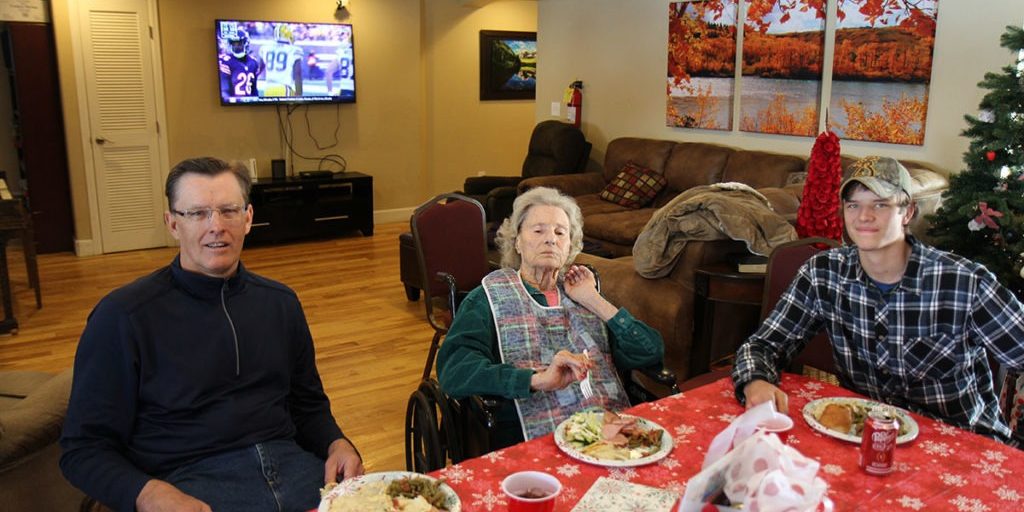
This one surprises people, but it comes up constantly. Once the adjustment period passes, a lot of residents settle in and seem, honestly, better than they were at home. More engaged. More social. Sometimes even happier day to day than they’d been in months.
Part of this is structure — consistent meals, consistent activity, people around them instead of long stretches alone. The daily same care team faces that are becoming familiar, not a revolving door of different people all the time, add to that sense of stability. And then there’s the house dog, always a pet away, morning, noon and night — a steady, warm presence that does something for a person that’s hard to put into words.
Simply not carrying the burden of trying to manage a house or routine that had become too much to handle matters too. Families often feel a strange mix of relief and guilt when they notice this. Both feelings are allowed to exist at the same time.
A good memory care team treats the first month as its own distinct phase, not just move-in day plus normal life. Staff are watching closely. Learning what soothes someone and what agitates them. Figuring out food preferences, sleep patterns, which activities land and which don’t. Building the kind of familiarity that eventually makes a resident feel like this actually is home.
Communication with family matters a lot here too. You should be hearing from staff during this period — not just when something goes wrong, but as a way of keeping you looped into how things are actually going.
Visit, but pace it. Too many visits too early can actually make the adjustment harder, since it can reactivate the desire to leave with you every time you show up. Staff can help you figure out the right rhythm for your specific situation.
Bring familiar things. Photos, a favorite blanket, something that smells like home. Small objects do more grounding work than people expect.
And give yourself the same grace you’re trying to give your loved one. This is hard on you too. You’re allowed to grieve the version of life you had before, even while knowing this was the right move.
Normal adjustment struggles are different from real red flags. If things aren’t improving at all after several weeks, if you’re seeing signs of neglect, or if your gut is telling you something’s actually off rather than just hard, that’s worth raising directly with staff or, if needed, looking elsewhere. Trust that instinct. It’s different from the ordinary discomfort of watching someone adjust to something new.
For most families, though, the first 30 days are rough and then they’re not. Things settle. Routines take hold. And a lot of families look back a few months later and wonder why they waited as long as they did to make the move.
If you’re in the middle of this right now and want to talk it through, we’re here. We’ve walked alongside a lot of families through exactly this stretch, and you don’t have to go through it without support. Reach out anytime.