Families searching for memory care in Arvada, Lakewood, or Golden often ask what daily life actually feels like for someone living with dementia. One of the biggest differences people notice in our homes is the presence of our resident dogs.
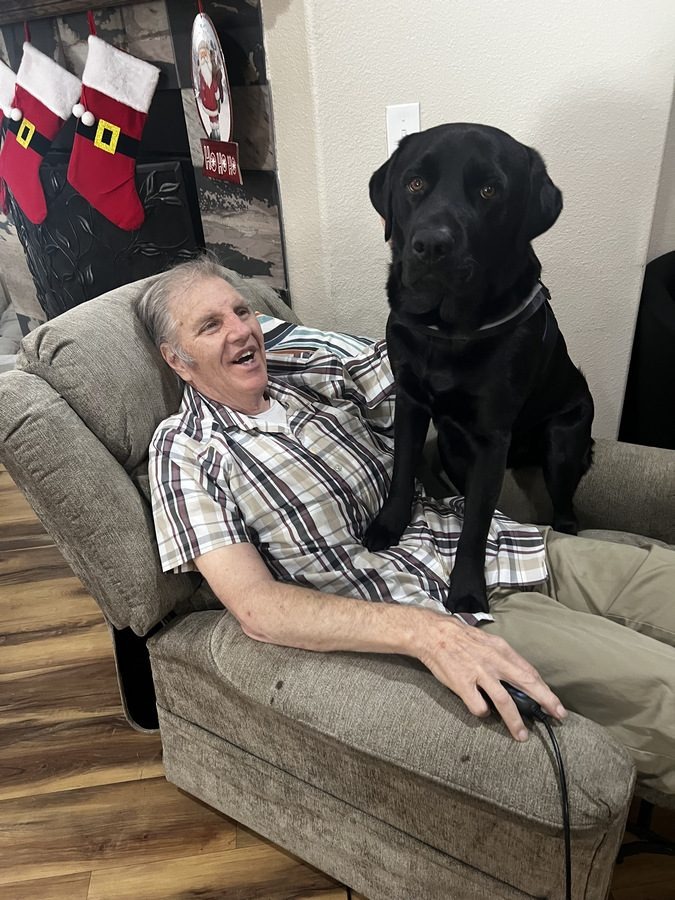
There’s something that happens pretty regularly in our homes that I never get tired of seeing. A resident who’s been quiet all morning, maybe a little withdrawn, maybe stuck in a loop of anxious thoughts, and then the dog walks in. They reach down. The dog comes over, tail going. And just like that, something shifts. The tension in their shoulders drops. They start talking. Sometimes they laugh.
It’s one of those things that sounds soft and feel-good until you’ve watched it happen enough times to realize it’s actually doing something real.
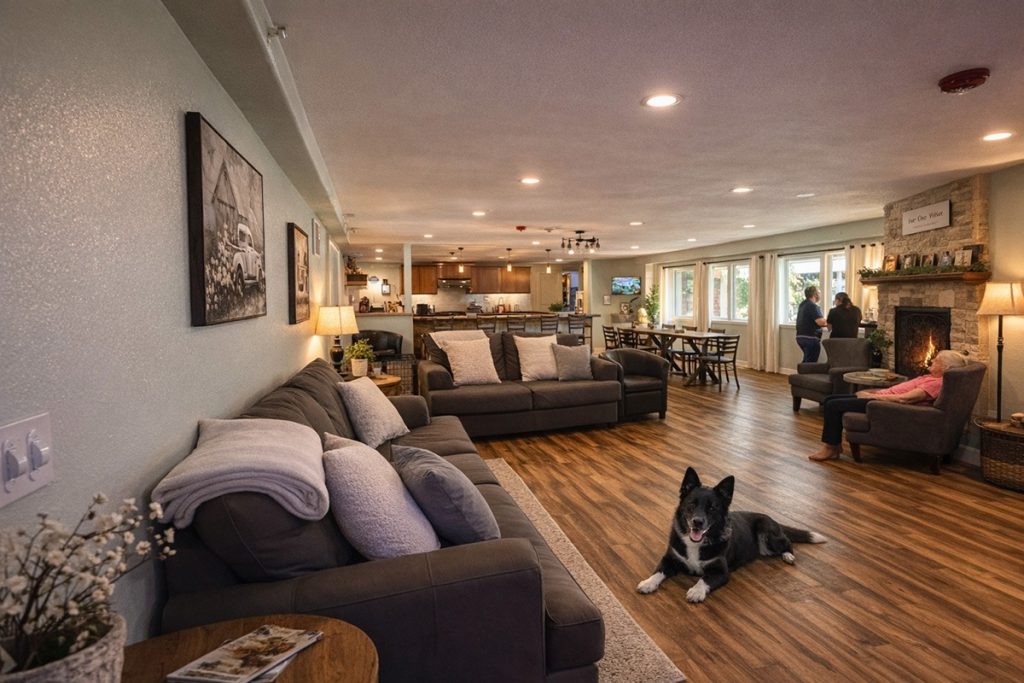
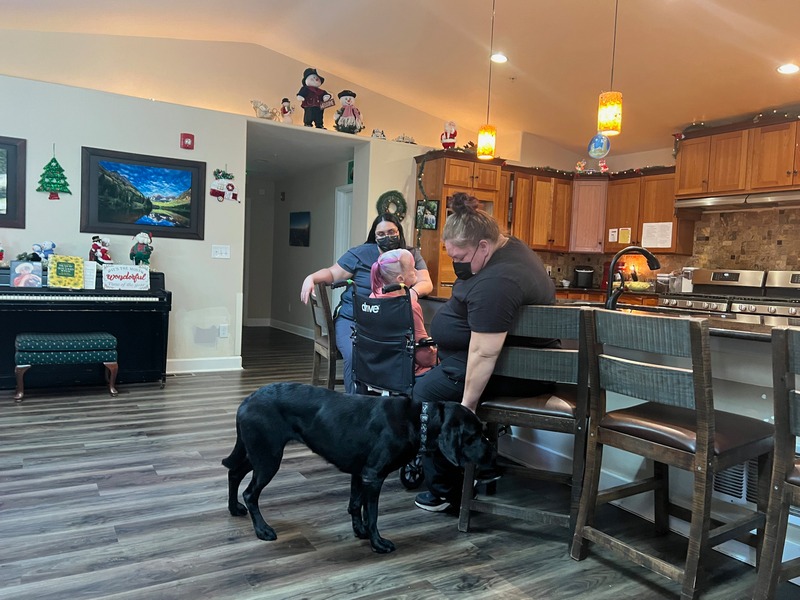
Every one of our five homes has its own dog. Not a therapy dog that shows up on scheduled Tuesdays. A dog that lives there, sleeps there, knows the residents by name basically, and has a favorite spot on the couch. Diamond is at our Golden house, a shepherd-lab-border collie mix, six years old, rescued from a homeless camp by Lola’s Rescue, genuinely one of the gentlest animals you’ll ever meet. Dolly is at South Lakewood, part Lab, part honestly we think guardian angel, rescued back in 2018 by the Evergreen Animal Protective League. Etta’s at Lakewood, a black Lab from Mile High Lab Rescue who arrived in 2022 and has this calm, steady energy that settles a whole room. Dory’s been at Arvada since 2019, came from Good Dog Rescue, and has a way of making every resident feel like they’re her person specifically. And Sadie at North Arvada, who’s been there since 2019 and whose arrival basically marked the opening of that home.
All rescues, by the way. Every single one, going back to when we opened our first home in 2011. That wasn’t an accident.
Dementia does a lot of things to a person’s daily experience, and a lot of them are disorienting in ways that are hard to fully describe from the outside. Routines that were automatic stop being automatic. Familiar things become unfamiliar. The world gets confusing, and that confusion often shows up as anxiety, agitation, or just a kind of flat withdrawal.
Animals cut through that in a way that not much else does. A dog doesn’t ask anything of you cognitively. It doesn’t require you to remember its name or track what day it is or follow a conversation. It just shows up, warm and consistent and interested in you, the same way it did yesterday. For someone whose world has become unpredictable, that kind of steadiness is genuinely calming.
There’s research behind this, though I won’t go too deep into it. The short version is that time with animals has been shown to lower stress hormones, reduce agitation, and increase the kind of calm-alert state that’s good for pretty much everything. Heart rate goes down. People who haven’t been talking start talking. It happens consistently enough that it’s not coincidence.
One of the quieter losses that comes with dementia is the feeling of having a role. Of being needed. That slowly disappears, and it’s a real thing that affects how people feel about themselves and their days.
A dog that needs to be fed, or wants to go outside, or just wants to sit with someone — that’s something. It’s small-scale and low-stakes but it’s real. We see it with our residents regularly. Someone who drifts through a lot of the day becomes very present and purposeful around the dog. Feeding time is their thing. Taking Dory out to the yard becomes part of their routine, something they look forward to. It gives shape to parts of the day that might otherwise feel empty.
Sadie does this at North Arvada. She seems to find whoever needs company most on a given day and just goes and sits with them. Whether that’s instinct or coincidence, I couldn’t tell you. But staff notice it, and families who visit notice it too.
Therapy dog programs are good. We’re not knocking them. But there’s something specifically valuable about a dog that actually lives in the house, and it’s the familiarity piece.
Etta isn’t a special occasion at Lakewood. She’s just there. She’s on the couch when residents wake up. She’s around at breakfast. She’s there in the late afternoon when things tend to get harder for a lot of people with dementia — that stretch of the day when agitation tends to rise, which in memory care gets called sundowning. Having a calm, familiar animal around during that window has a settling effect that’s hard to replicate with programming or activities.
There’s also this: residents with dementia may forget a lot of things, but they remember the dog. Dolly’s name comes out easily when other names don’t. They light up when Etta walks in even on days when not much else is landing. That consistent, uncomplicated relationship is rare and worth a lot.
Honestly it’s pretty ordinary, which is the whole point. Diamond is just part of the Golden house. She finds whoever wants company in the morning. She goes out back with residents who want some fresh air. She settles near someone having a hard afternoon without being asked to.
Families who come to visit usually mention the dogs within the first five minutes. Not because it’s a selling point. They just notice that it feels like a home where a dog lives. Which is exactly what it is.
We choose our dogs carefully, train them with staff, and make sure they’re genuinely suited to a memory care environment. It’s not something we take lightly. But we also believe pretty firmly that a house should have a dog in it, and our residents deserve that.
If you want to come meet Diamond, Dolly, Etta, Dory, or Sadie in person and see what daily life in one of our homes actually feels like, we’d love to have you. Schedule a visit at any of our five locations across Arvada, Lakewood, and Golden. Just reach out and we’ll set it up.