
Small Residential Memory Care Homes
There’s probably no conversation in family life that feels harder to start than this one. You’ve been thinking about it for weeks, maybe months. You’ve rehearsed it in your head. And then you sit down across from your parent, or your spouse, or your sibling, and the words just don’t come out the way you planned.
That’s normal. This is genuinely hard. But how you start this conversation matters a lot, and a few small shifts in how you approach it can make the difference between a discussion that opens a door and one that slams it shut.
The conversation goes sideways fastest when it opens as an announcement. “We think it’s time for memory care” lands like a verdict. The person on the other end feels judged, outnumbered, and like the decision is already made without them.
A better starting point is something you’ve actually observed, said with care. “I’ve noticed you seem tired lately, and I’ve been worried about you.” Or “I know the last few months have been a lot, and I want to make sure you’re getting enough support.” You’re opening a conversation, not delivering news.
This matters because it keeps the other person in it. They’re not defending themselves against a conclusion. They’re talking with you.
“What would feel like the right kind of support to you?” is a question most families never ask. They come in with a plan and try to get buy-in. That rarely works.
Your loved one has fears about this. Losing independence. Being forgotten. Ending up somewhere cold and institutional that doesn’t feel like them. Those fears are worth hearing, not dismissing. When someone feels genuinely listened to, they’re more likely to stay in the conversation instead of shutting down.
You don’t have to have all the answers. “I don’t know yet either, but I want us to figure it out together” is a completely honest and useful thing to say.
A few things that tend to make this harder than it needs to be.
Don’t make it about safety only. “You’re not safe living alone” is probably true, but it’s also the thing most likely to trigger defensiveness. Safety matters, but leading with it can feel like an attack on someone’s competence and independence.
Don’t bring everyone at once. A family meeting where six people show up to make the case can feel like an ambush. Start one on one if you can.
Don’t promise things you can’t guarantee. “You’ll love it there” or “nothing will change” aren’t things you actually know. Better to be honest: “I think it could be really good, and I want us to go look together before anything is decided.”
Don’t treat it like a one-time conversation. It almost never is. Plant the seed, let it sit, come back to it. Pushing too hard in one sitting usually sets things back.
Framing this around connection rather than logistics tends to work better. You’re not trying to solve a problem. You’re trying to make sure someone you love is okay.
“I want you to have people around you. I want you to have good days.” That’s the truth of it, and saying it plainly lands differently than talking about levels of care and staffing ratios.
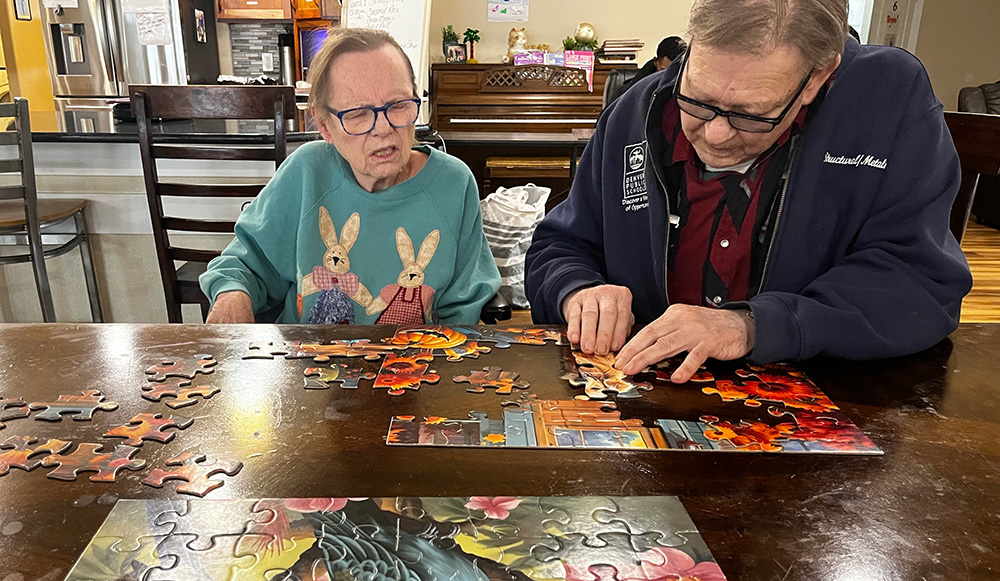
If it feels right, offer to just go look at a place together. No commitment, no pressure. Just to see. A lot of families find that the actual visit does more than any conversation could. The home feels warmer than expected. The dog comes over. Something shifts.
At Applewood Our House, we’ve walked alongside a lot of families through exactly this moment. If you’d like to come see what residential memory care actually looks like before you have to say anything definitive, you’re welcome to visit any of our five homes across Arvada, Lakewood, and Golden. Just reach out and we’ll set something up.