






There are many reasons why dental health matters in dementia. This is warm, practical advice with gentle routines, caregiver tips, and easy tools to keep eating, comfort, and overall health on track.
You’re in yesterday’s sweater again, sleeves sliding over your hands. The light is kind, pale on the sink. Your mom waits at the table, spoon nudging her tea like a small, familiar chore.
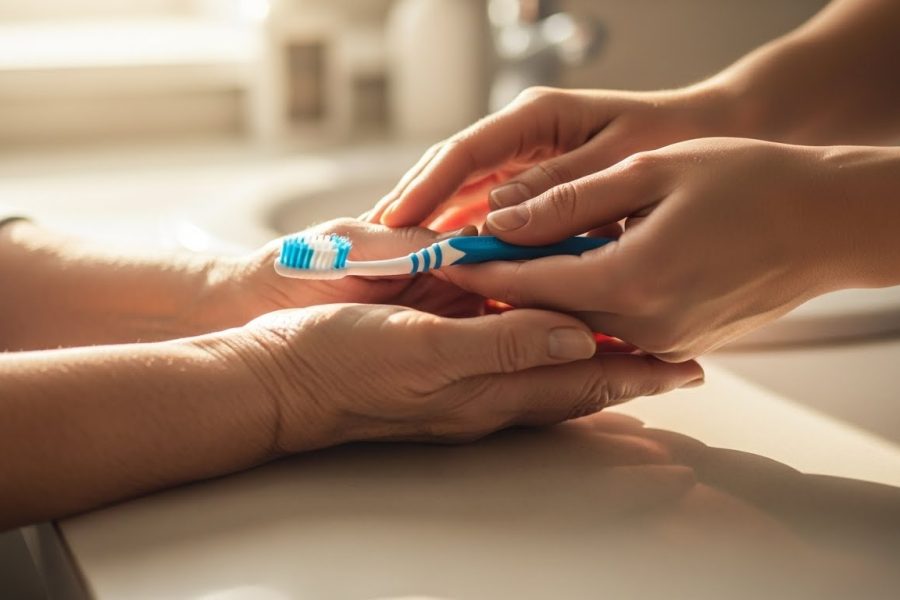
You take her to the bathroom. You give her the soft blue-handled toothbrush. You wrapped it in tennis grip tape weeks ago.
It smells like mint and clean towels. In the mirror, you find your smile first, your voice right after. The morning eases.
You brush your own teeth first, “See? Just like this”—and she watches, then mimics. You hand her the brush like it’s a secret. It works, most days.
Mouth pain shows up in strange ways when someone has dementia. Agitation, refusing to eat, and wandering. A toothache can make soup taste wrong or dinner feel like punishment.
Healthy teeth and gums buy quieter days: fewer infections, real meals, and less ache. The bigger picture is comfort, dignity, and avoiding those late-night detours to the ER.
A grimace while chewing. Hands to the jaw. Grinding teeth at night. Turning away from the brush. That’s not resistance. That’s discomfort. And it doesn’t get better with more coaxing, just a phone call to the dentist.
Plaque. Bleeding. Swollen gums. All of it can invite bacteria where it doesn’t belong. In seniors, that can mean pneumonia or fever or a week in a hospital bed that didn’t need to happen.
Meds are often the cause, like sleeping pills, allergy stuff, and antidepressants. A dry mouth means more cavities. Make sure that your loved one always stays hydrated.
Try brushing after breakfast or before a favorite show. Anchor it to something familiar. Always say hello first—eye contact, a smile, maybe a shoulder touch, and then, slowly introduce the toothbrush.
Try floss picks or tiny brushes. If not, focus on brushing twice a day and aim for more dentist cleanings.
Skip the rinse. Use a cloth to wipe the teeth and gums, or ask for a paste that stays on.
You’re not failing. It’s hard to let someone in that close. Try brushing together. Mirror each other. Use your hand over theirs—gentle, not forceful. Sing a song. Try again later if it goes sideways.
Try giving some yogurt with cinnamon, cubed apples, or some soft pears. Avoid sticky stuff, and be sure to offer water after treats.
Clean daily and soak at night. Brush gums before putting them back in. Watch for red spots or drooling. If something feels off, call.
Call ahead. Ask for the quiet slot. Write a one-page summary with meds, sensory needs, and what helps at home. Bring it in with a calm voice and a soft playlist. Stay beside your loved one if that helps.
Bleeding that won’t stop. Sores. A new smell. A loose tooth. A swollen cheek. Trouble eating. These aren’t wait-and-see things.
Write what time brushing happened, what worked, what didn’t. Something like: “Skipped floss, tried water rinse. She liked cinnamon paste today.” Patterns help.
When it’s all done, take five minutes for yourself. Sit outside. Text someone. Eat something cold and crunchy. You did something small that changed the day. That counts.
After dishes, you rinse the spoon she always wants, it’s the one with the tiny dent.
She smiles at you with clean teeth. Care looks like a warm smile and a brush in a cup. It lives in these small, steady things.