

Explaining dementia to children requires clear, simple language and patience to help them understand the condition in an honest and age-appropriate way.
Two hours ago, I tried to explain to my five-year-old that her grandpa who sings old songs to her, is losing his memory.
How do you explain dementia to a child without breaking your own heart a little? There’s no script for this. It’s messy and painful and absurd.
One minute I’m using my “Mom voice” to say everything’s okay; the next I’m sobbing and thinking nothing is okay. If you’re in a similar boat, friend, pull up a chair.
I’m about to overshare my experience so you know you’re not alone.
Here’s the first thing: our kids sense everything. You can try to shield them, but they’ve already picked up that something’s wrong with grandpa or grandma.
My daughter knew something was off the moment her grandpa forgot her name. And as much as I wanted to avoid the conversation, experts agree it’s better to be open with kids about a dementia diagnosis.
Keeping them in the dark can backfire – it can make them anxious, confused, and even more scared. So deep breath, because we need to talk to them.
But how? What do you say when you can barely process it yourself? Let’s dive in (together, hand in hand) and figure this out.
Telling the Truth in Kid-Friendly Words
She asked me her first big question in the Wendy’s drive-thru line.
“Why is Grandpa acting funny?”
And just like that, I had to decide: soften it or tell her the truth.
So, I told her: “Grandpa’s brain is sick. He forgets stuff. It’s not his fault.”
She looked out the window like that was enough. Maybe it was.
I skipped the big medical words. No “Alzheimer’s” lecture, no complex details about neurons. Just a basic truth: Grandpa’s brain isn’t working like it used to.
You can even compare it to something a child knows. I said it awkwardly, like a substitute teacher trying too hard: “Brains are kind of like puzzles. And sometimes, pieces go missing.”
It felt too simplified. Maybe even dumb. But she smiled like I’d just cracked the case. Adults overthink everything. Kids just want the picture on the box.
She nodded like, Oh, a puzzle with missing pieces. She got it.
Then, their grandpa called my son by his brother’s name. Again. And I saw the confusion wash over that little face like a slow wave.
So, I said: “Grandpa’s brain is a little confused right now.”. It’s mixing people up by accident.” I made sure to add, “But he loves you so much, and that hasn’t changed.”
Maybe I leaned too hard on that. Repeated it like a song lyric I didn’t believe yet. Because I needed them to know: Even when he messes up names, forgets birthdays, or stares too long at the fridge…
He still loves them. That part doesn’t go away. The disease changes how he shows it, not how he feels in his heart.
And yes, I used the actual word “dementia” eventually. Kids are smart; they might hear it from doctors or other adults. For my 5-year-old, I started with “Grandpa’s brain is sick.”
There’s something about saying it — actually putting the word in the air: “Dementia.” It gave my 9-year-old son something to hold onto. “It’s a sickness in his brain,” I said. “It makes him forget things.”
He didn’t cry. He just nodded, like, “Okay. I can file that somewhere.” For tweens or teens? I go full-label: “Alzheimer’s. It’s a brain disease.”
Simple, honest, and loving. That’s been my mantra. If you’re not sure what to say, one rule of thumb I learned is: truthful but not terrifying. We can’t promise that everything will be okay like it was before, because it won’t. But we can assure our kids that they’re safe, that they didn’t cause this, and that their grandparent still loves them dearly.
If you’re waiting to feel prepared for these conversations, good luck. Half the time, I’m winging it.
Like when Grandpa started laughing at nothing and my daughter asked, “Is he okay?” I said, “I’m not sure, babe. That’s part of the illness. We can ask his doctor.”
Then we made hot cocoa and went to sit with him. Because even without answers, we still show up.
In fact, letting your child see that you’re learning as you go teaches them it’s okay not to be okay with all this. You’re modeling that this is confusing and hard for grown-ups too – and that’s alright.
When Kids Feel Sad, Scared, or Mad (It’s All Normal)
After The Talk, be prepared for big feelings. Kids may not show it right away – or at all in obvious ways – but trust me, it’s churning in there.
One day your child might quietly color a picture of Grandma with a frown, and the next day they refuse to visit her at the care home.
My normally bubbly daughter got very silent after I explained Nana’s condition (my mother-in-law), and at first, I thought I’d totally screwed up.
But when I crawled into her fort of stuffed animals and asked how she felt, out it came: “I’m sad. And kind of mad. And I don’t know why.”
They might cry. Or say they don’t want to visit today. Or whisper to you that Grandma scares them a little when she “acts weird.”
Let them. They’re not wrong. This isn’t easy for them, either. Sadness, fear, and anger all show up. Sometimes in a 5-minute span. And it’s not your job to erase it. Just ride it with them.
My older kid admitted he was angry. He was not angry at Grandma, but at the situation. “It’s not fair,” he snapped, kicking a pile of Legos. “Why can’t the doctors just fix it?”
It’s completely normal for them to feel this way (heck, I feel that way too).
So, what do we do? Let them feel. I used to jump in with pep talks. “Grandpa still loves you!” “Let’s focus on the good memories!” Nope. Didn’t land.
Now I say: “It’s okay to feel sad. Or mad. Or like you want to scream into a pillow.” No fixing. Just sitting in it with them. Turns out, that’s what they needed. I do too.”
We have to validate their feelings, even the “ugly” ones. Because pushing those emotions down or pretending everything’s fine only teaches them that their feelings are something to hide.
I’ve literally said to my son, “It’s okay if you’re mad. I get mad about it too. I hate this disease also.” Watching his eyes, I could almost see relief in them, like phew, I’m not a bad kid for feeling this.
Invite questions – over and over again. Kids don’t just have The Talk once; they’ll come back with new questions as they process things.
My little girl circled back a week later and asked, “Does Grandpa know he has dementia?” (Oof, what a question, right?)
That led to another late-night chat about how Grandpa knows he’s forgetful and it makes him frustrated too, and how we’re all doing the best we can.
The point is, make sure your child knows they can always ask you anything, anytime, and you won’t shut them down often end these talks with, “Thank you for telling me how you feel.
When the world feels wobbly, like when Grandpa calls her “Emma” instead of “Lena.”
I say the thing I always say: “I love you to the moon.”
And I tell her she’s not alone. That there are other kids sitting with the same hurt. It’s not just her. Even if it feels like it in math class or on the playground.
I tell her lots of families go through this, unfortunately. In fact, the Alzheimer’s Society even has a whole webpage just for kids and teens dealing with a family member’s dementia.
We read a kid-friendly brochure together that had drawings and stories. She realized other kids feel confused and sad about this stuff too. It really helped her (and me) to know our feelings aren’t weird or wrong.
If your child is more on the quiet side, they might not say what they feel, but you’ll see it. Maybe in behavior changes or tummy aches or new fears.
It started with my son dragging his blanket in like it was his room. He didn’t say anything. He just climbed in the bed.
That was the clue. Not a tantrum, and not a question. It was just a quiet rearranging of his world. He was saying, “Help me feel safe again.” And I was listening. With arms, not words.”
We gave him that comfort. We also looped in his teacher and school counselor, just so more grown-ups in his life knew what was going on (Pro tip: a quick email to the teacher can prevent a lot of confusion and helps them support your child better if, say, Grandpa’s condition comes up in show-and-tell or your kiddo acts out in class.)
Bottom line: Listen and reassure. Over and over. However, many times they need. There’s no one-and-done here.
Some nights I’m done. Fully fried. Like, don’t-even-look-at-me tired. But I still lean in. Still listen. Even when my brain wants to slide off the couch and evaporate.
But every time you listen, you’re doing something incredibly important. Because when I show up like that, my kid learns that their feelings matter. That we can do hard things, together. That’s what power looks like around here. No cape. Just presence.
Fear Shows Up First, But it Doesn’t Have to Stay
My younger child admitted she felt scared around Grandpa after Grandpa started forgetting who she was. “It’s like Grandpa doesn’t know me… it makes my tummy feel yucky,” she said.
Children are often frightened when their beloved grandparent suddenly acts “different” – maybe Grandpa got upset and yelled out of confusion, or wandered off in a store and everyone panicked.
These things can be scary for a kid. And guess what? “Children are afraid because they just don’t understand it,” one expert aptly noted. Knowledge truly is power here.
The more we explain why Grandpa is acting that way (in simple terms), the less mysterious and monstrous it seems.
One trick I learned was to connect the symptom to something familiar. For example, when my son saw Grandpa have a burst of anger over not finding his keys, he was afraid. Grandpa had never raised his voice at him before.
“Why did Grandpa yell like that?” It sat in the car between us until I said: “His brain is sick. He gets confused and upset sometimes — like how you get when you’re too tired to think straight.”
That landed. He’d lived that. We all have.
It helped him see Grandpa’s outburst not as “Grandpa is mean” but “Grandpa’s illness made him frustrated”. In kid logic, that’s a huge shift. Suddenly the “scary” behavior isn’t aimed at them – it’s just part of the sickness.
Still, fear might linger. My daughter asked me point-blank, “Will that happen to you and Dad?” I could hear the Please say no in her tiny voice.
She didn’t have the language for it. But the question was in her eyes. So, I said, “You’re safe. Dementia happens to older people. Grandpa’s age. Not yours. Not mine.” I added,
“I take care of myself. And you can’t catch it. I’m not going anywhere.” She nodded slowly. Like something heavy just slid off her little shoulders. We’re safe.”
Now onto empathy – the silver lining in all of this, if there is one. I’ve seen little glimmers of it in my kids, even amid the confusion.
The first time my son gently took Grandpa’s hand to lead him to the couch, I swear I almost cried (happy tears, this time). He did it because he wanted to help Grandpa not feel lost.
Some days I wonder what this will leave behind. But then I see my daughter rub Grandpa’s back when he gets confused. Or my son whisper, “It’s okay, Grandpa. I forget stuff too.”
And I think: Yeah. This is hard. But it’s planting something in them.
My son saw me help her grandpa up the stairs the other day — quiet, steady, and no fanfare. Later he handed his little sister a snack and said, “I’m just being helpful like you.”
That’s when it hit me. They copy what we do. Not what we preach. So, when their grandpa forgets what day it is, I say, “No worries, dad,” even if I’m unraveling inside. Because that’s how they learn love.
My kids see that. They’re watching how I react. And slowly, they start mirroring it.
We also talk a lot about how love is still there, even if their grandpa can’t express it the same way.
“Grandpa might forget our names sometimes, but he feels that we’re someone who loves him,” I told my son one day.
“Our love gets through, even if his brain is mixed up.”
I keep reminding them: He’s still your grandpa. The relationship still lives here. Even in the weirdness. And once they get that? Their vibe shifts.
It’s not just confusion anymore, it’s also care. They start protecting him. Sitting closer. Explaining gently. That’s empathy being born.
Here’s something that helps: Give them something to do. Nothing overwhelming, just small acts that help them feel connected.
My daughter brushes Nana’s hair when we visit her. Slow, gentle strokes. Nana lights up like it is spa day.
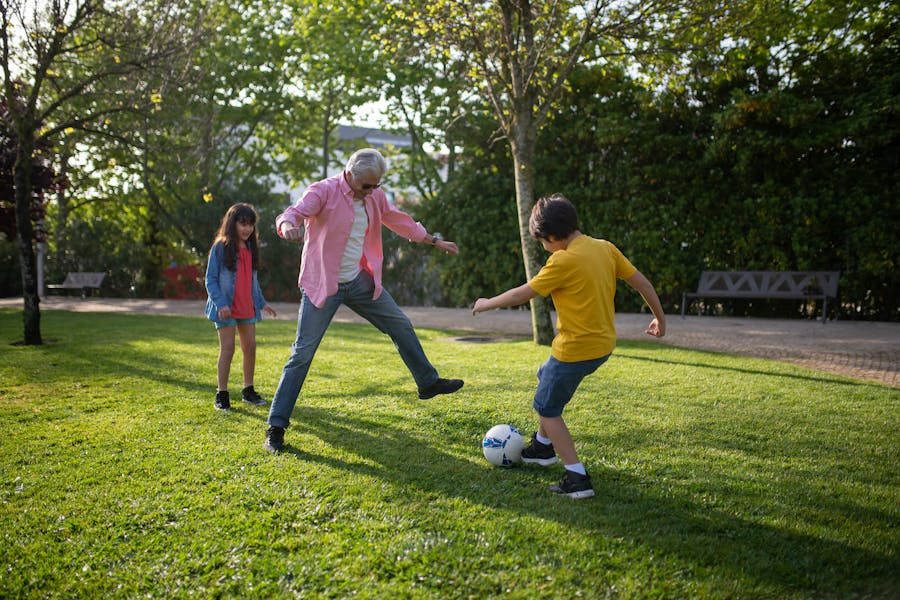
My son kicks the ball around while Grandpa watches from a lawn chair, and claps like he’s front row at the World Cup.
It’s not just “helping.” It’s bonding, disguised as everyday life. Are these grand gestures? No. But they’re bonding moments where dementia takes a back seat to just being together.
When kids have a job or role (“I’m the official photo-album page turner for their grandpa”), it can replace some of their fear with a sense of purpose.
Yes, they might eventually comfort Grandpa. Make him laugh. Offer him their last gummy bear.
But it has to come from them. If my son didn’t want to sit next to Grandpa that day, I didn’t force it. Empathy isn’t homework. It’s an invitation.
We took it slow. Over time, as he understood more, he warmed up on his own. Patience, patience. (Ugh, not my best virtue either, but I’m learning.)
I’ll tell you what though: the first time I overheard my kids giggling with their grandpa again, in spite of everything, I knew we were going to be okay.
It used to be all tension — eyes wide, shoulders up, ready to bolt. Now? They sit a little closer. They answer Grandpa’s repeat question without the heavy sigh. We still have rough days. But the curve is bending toward love. And I’ll take that. Every single time.
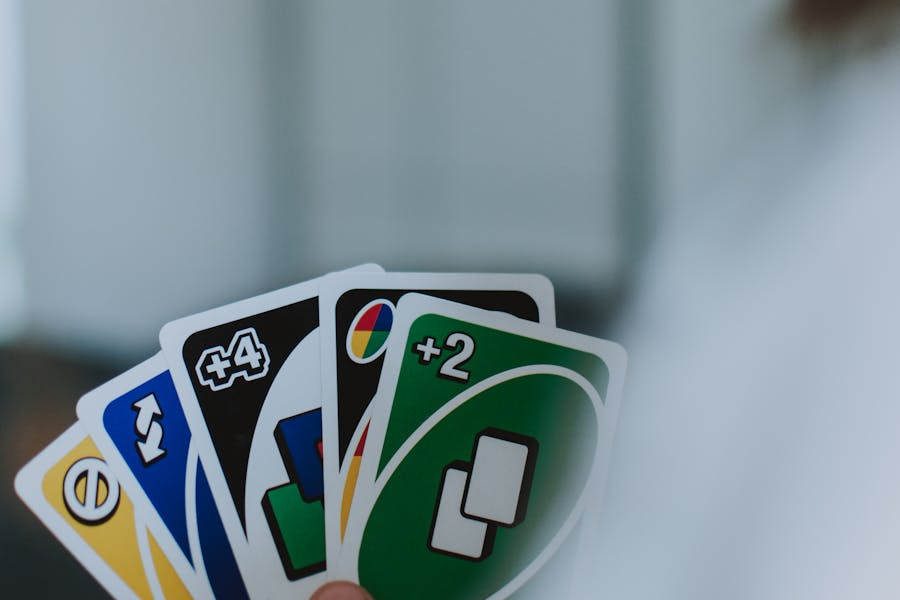
When the Games Stop Making Sense
The day grandpa forgot how to play Uno, my daughter cried in the car. “I thought he loved that game,” she said. He did. He just doesn’t now.
So, we shifted. We listened to grandpa’s favorite music. We also watched squirrels out the window.
Moments over memories. That’s what keeps the thread intact.
Do things now that bring joy, even if Grandpa won’t remember it later – your kids will remember. And so will you.
We’ve tried a lot — some flopped, some stuck. But these? These little moments worked.
- Music and sing-alongs: There is magic in music. We put on old songs that grandpa loves – the ones from his youth, like some good ol’ Frank Sinatra, and we all sing (or hum) together.
My 6-year-old will twirl her grandpa around the living room in a goofy dance. It always gets a smile.
Words? A struggle. Dates? Gone. But music? Somehow, music still knows the way. And nothing gets my son giggling like grandpa belting out a song older than the dishwasher. It’s magic. And it matters.
We’ve turned that into a fun little ritual. “Grandpa, teach us one of your old songs!”).
- Arts, crafts, and chores (yes, chores): Simple crafts are wonderful. Coloring books, play-dough, and painting a clay pot, are activities that doesn’t require short-term memory, just the enjoyment of doing.
We colored a big sunflower together, while the kids each filling in petals. It was messy and perfect. Even everyday “chores” can be bonding: we’ve folded laundry together and let the kids “help” Grandpa match the socks.
Repetitive, mindless tasks can be soothing for everyone. And a young child loves feeling helpful. (Pro tip: avoid anything too hazardous or complicated; keep it easy and safe). - Storytime and photo albums: Even if Grandpa can’t follow a whole story, reading picture books together is still a lovely shared activity.
My daughter will “read” (mostly from memory) a simple story to Grandpa, showing him the pictures. It makes her proud and keeps him engaged for a few minutes.
We also bust out the old photo albums a lot. Kids adore hearing the funny stories behind old photos (“Grandpa, is that you with a pony?!”), and even if our loved one repeats the same story every time, who cares.
When Grandpa tells an old story and my son listens like he’s at a campfire. Let them soak it in. Let them ask weird follow-ups. It’s not just storytelling, it’s history, passed with love. - Puzzles, games, and activities – We bought an oversized-piece puzzle of a cute cat – it’s like 12 pieces, meant for toddlers. They all worked on it together. 10 minutes of teamwork and meow, they completed it and high-fived all around.
We sat outside, named birds by color, watered the same plant twice. It wasn’t much.
But for a while, no one was confused. No one corrected anyone. Just Grandpa, the kids, and a peace lily living its best life. Sometimes “normal” is overrated. I’ll take that instead. - Simple is good. The activity itself is secondary to the feeling of “we’re spending time together”.
The key is to meet your loved one where they are. I told my son to stop trying to explain Uno to his grandpa the day he called the Draw 4 card “spicy bacon.”
Now they just toss a ball back and forth in the backyard. Sometimes they just sit. And hum “You Are My Sunshine” like they’re starring in a movie about losing people you love slowly.
Some of my most precious moments have been when my kids simply sat beside their granddad and talked to him. They stopped quizzing his memory, and just chatting about their day, even if he only nods along.
It might not seem like much, but trust me, it’s doing something for both of them.
One more tip: Humor helps, when appropriate. We laugh a lot in our family. Sometimes, it’s just silly kid jokes. If Grandpa pours orange juice on his cereal (been there), we all giggle and say “Whoa, guess we’re trying a new recipe!”
The giggle diffuses the embarrassment. If their grandpa asks the same question four times, the kids now make a light game of it – they answer like it’s the first time, every time, then grin at me like we did it!
Laughing together when little mix-ups happen can reassure your child that Grandpa isn’t a scary stranger. He’s still the same person who loves to joke and laugh, just a bit forgetful.
Obviously, use your judgment. We’re not laughing at our loved one, we’re laughing at the funny situations that dementia drops us into. There’s a difference.
When my dad was more lucid, he always said, “If I start acting kooky, just roll with it and laugh. Better than crying.”
So…we do. It’s strangely beautiful, finding flickers of joy amid the heartbreak.

Stories That Heal - Children’s Books About Alzheimer’s & Dementia
As an English major and certified book nerd, I naturally turned to books to help explain dementia to my kids.
And wow, there are some gems out there. Reading a story about another child going through the same thing can make your little one feel seen and open up conversations you didn’t even know how to start.
We made “special story time” a weekly thing – every Sunday afternoon, we’d read one of these together, often snuggled on their grandpa’s couch while he dozed.
Here are a few wonderful children’s books that gently tackle Alzheimer’s and dementia (they’ve been lifesavers for us):
- “When My Grammy Forgets, I Remember” by Toby Haberkorn: Written from a child’s perspective, this book is gold. One page in and my daughter was like, “Wait—is this us?”
She saw herself in the kid who didn’t scream or panic when Grammy forgot the names of the Spice Girls. We talked about it. Compassion. Patience. And how forgetting isn’t the same as not caring.
The next time Grammy said, “Hey you—what’s-your-face,” my daughter just smiled from ear-to-ear.
- “My Grandma Has Dementia” by Alex Winstanley: A lovely picture book aimed at ages ~4–10. The illustrations are warm and friendly.
It explains dementia in simple terms and, most importantly, gives kids ideas on how to be supportive and stay connected with a grandparent who has memory loss.
My son’s favorite part was that it showed a grandma still smiling and enjoying life with her family’s help – a perspective he really needed to see during some tough weeks.
- “The Forgetful Elephant” by Irene Mackay: This one uses an animal story to explain what dementia might feel like. Ellie the elephant is worried because her grandpa elephant keeps forgetting her.
Through a gentle explanation from her mom (and a sweet poem Ellie writes), she learns that grandpa’s memory is ill and comes up with ways to help him remember her.
My kids loved that it was about elephants. It made a heavy topic feel a bit lighter, and it opened up a talk about what we could do to help their grandpa remember things (thus the photo album idea was born).
- “Lovely Old Lion” by Julia Jarman: A beautifully illustrated tale of a young lion who notices his grandpa, King Lion, becoming forgetful and not wanting to play.
With help from some wise old animal friends, Little Lion finds ways to help his grandpa and understand what’s happening.
This book has a gentle, hopeful tone and prompted my kids to ask questions like, “Do old people get dementia because they’re really tired?” (Not exactly, but an adorable thought.)
It’s great for younger children, explaining dementia in a soft, storybook way that feels more adventure than tragedy.
All of these books opened the door for my kids to talk about what’s happening with their grandparents. Sometimes we’d finish a book and one of them would immediately say, “That’s like us and grandpa!”
Then, we’re talking freely about his dementia without it feeling so scary. Representation matters, even in picture books. Seeing families like ours in stories make my kiddos feel normal and less alone.
Check your local library or bookstores for these. Alzheimer’s Storytime can be more than just a soothing ritual, it becomes therapy, education, and bonding all in one.

Never Feel Too Proud to Get External Support
Hey, you. Yeah, you in yesterday’s T-shirt eating crackers over the sink. I see you.
You’re doing the impossible on no sleep and half a heart. Your brain’s juggling school drop-offs and what-ifs and adult diapers.
You’re trying not to scream into the void. Meanwhile, your kid needs another hug and your mom’s asking what year it is again. No one’s tucking you in.
You’re mothering everyone… and somehow still expected to function like a person. It’s bananas. And you’re still here.
Who takes care of the caregivers? We can’t do this alone, and nor should we.
I used to think asking for help was basically admitting I was failing. Like if I made one phone call to a support group, someone would show up and revoke my caregiver license.
But I made the call. Voice cracked halfway through. And the woman on the other end? She didn’t judge. She just listened. It was weird and exactly what I needed.
But once I did, it was like a lifeline. I joined an online support group for adult children of parents with dementia. Hearing others vent and share little victories kept me sane.
I found a therapist who let me bawl my eyes out about how unfair it all is, then helped me strategize ways to cope. We even got the kids connected with a counselor at school who runs a “feelings” group; it’s been great for them.
If you’re in Colorado like me, there’s an amazing dementia care community called Applewood Our House. (And if you’re not in Colorado, stick with me, because the point is that local help exists, and that’s gold.)
Applewood Our House isn’t just a care home where you can eventually find a safe place for your loved one. It’s a community resource. They truly get what families like ours are going through.
They have five assisted living memory care homes across the Denver area, all focused on dementia care, and they’ve built this reputation for compassionate, resident-centered care.
But what I love is how they support the whole family. They offer resources, advice, and a shoulder to lean on for caregivers and grandkids alike. There’s a kind of magic in sitting in a room where no one blinks when you say, “She tried to butter her sock again.”
No sideways glances. No pity eyebrows. Just people nodding like, “Yep. Been there. Let’s talk.”
If you’re near Denver and barely holding it together? Visit Applewood Our House. Let someone else hold the heaviness for a minute.
Even if you’re not ready for memory care or anything like that, they have info and support for families. You can get caregiving tips to local support group referrals.
Sometimes just touring a place like that and seeing friendly faces who deal with dementia daily can relieve a ton of your anxiety. You realize, okay, there are caring professionals ready to help us whenever we need. You’re not shouldering this alone.
And for those outside Colorado, consider this your gentle nudge to tap into your local dementia resources. Alzheimer’s organizations, memory care homes, your pediatrician, and school counselors are all useful.
You’re stitching a safety net. For the days when everything unravels. That’s not weakness. That’s genius. That’s hero stuff.
I won’t tie this up with a neat little bow because real life is not a Hallmark movie. Some days will suck. Some conversations with your child will leave you in a puddle on the pantry floor (hi, that’s me).
But amidst the mess, there will be moments of grace: a fit of laughter over a silly memory, a quiet snuggle while your child holds Grandma’s hand, a brave question that sparks a healing talk. Treasure those.
Everything felt like too much until it didn’t. Sleeping kids. Quiet room. Love showed up, uninvited.
I realized we’re all kind of growing through this pain. Their hearts are hurting, yes, but also stretching and making room for more patience, compassion, and understanding than I ever knew kids could have.
Dementia is stealing a lot from our family, but it can’t steal the love. In our house, love is the one thing that does not forget. And our children, with their resilient, beautiful little souls, are living proof of that.

A Few Gentle FAQ's Can Help
Explaining dementia to children is never easy. Kids often have very practical questions.
Here are some my kiddos threw at me (usually at bedtime, naturally, when all the deep thoughts come out) and how I answered:
- “Can I catch dementia, like a cold?” – I reassured them no, you absolutely can’t. Dementia isn’t contagious like the flu or chicken pox.
You won’t get sick just by being around Grandpa. (I literally said, “You can’t catch it. Promise.”) That eased a huge worry – because apparently my daughter heard the word “sick” and thought of germs right away. “Did I cause it? Is it my fault?” – Oh, this one broke my heart. My little one whispered, “Is Grandpa sick because I didn’t talk with him enough?”
Cue me hugging her tight and explaining that nothing she did caused this. No one caused it – not her, not me, not anybody. It’s just something that happens to some people when they get older, and it’s nobody’s fault.- “Will Grandpa get better?” – I opted for honesty wrapped in hope. “He might not get completely better,” I said, “because his kind of sickness is one that doctors are still working hard to fix.
But we are taking care of him, and there are medicines and people helping so he can feel safe and happy.”My daughter looked worried at first, but then I added, “We’re all helping Grandpa together, even you. And we’re making each day as good as it can be.” That seemed to bring her some peace.