I’m going to be honest with you. Watching a parent, or a husband, or a wife change because of dementia is just brutal. There’s no nicer word for it. You keep thinking you’ll get used to it and you don’t, not really. They’re still there — the way they laugh, the stories they repeat, the little habits you’ve known your whole life — but day by day, things get harder. Small stuff first. Then bigger stuff. And somewhere in there, usually later than it probably should, the word “memory care” comes up in a conversation.
So that’s where you are, I’m guessing. Maybe a doctor said something. Maybe your sister’s pushing. Maybe you walked in one afternoon and something was wrong and you haven’t been able to stop thinking about it since. However you got here, you’re now trying to figure out where your person should go, and it’s a lot.
I wrote this to help. It’s not a sales pitch. It’s just the stuff that actually matters when you’re looking at memory care in Denver, especially the smaller, residential kind. Stuff we’ve learned from walking a lot of families through this.
Usually you know before you want to know.
There’s almost never a single moment. It piles up. Mom getting lost on roads she’s driven for 30 years. Dad taking his pills, forgetting, taking them again. The stove. Someone up at 3 a.m. wandering the house. And the spouse or adult kid who’s been holding it all together is now running on no sleep and losing weight and snapping at everyone.
One thing I’ll say, because we see it a lot: waiting until there’s an actual crisis usually makes everything worse. If your person can still be part of the conversation at all, even a little, the move tends to go smoother. And starting to look at places doesn’t mean you’re doing it tomorrow. It just means you’re not scrambling.
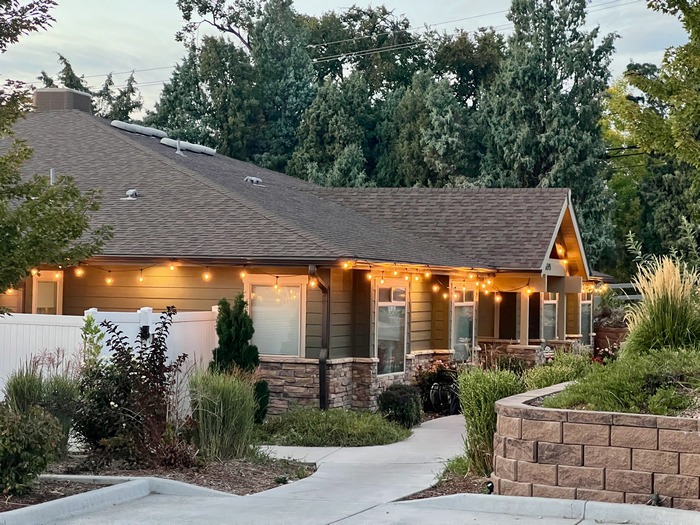
Once you start touring, you’ll notice fast that “memory care” is a really broad term. Some places are wings inside bigger senior living communities. Some are standalone buildings with 80, 100, 150 residents. And some, like what we do, are actual houses — in neighborhoods, with small numbers of residents.
These are not the same thing. Not even close.
The big facilities do offer some real things: more on-site medical staff, more formal programming, sometimes fancier amenities. That’s all fair. But they also feel like what they are — long hallways, name tags, a lot of unfamiliar people coming and going. For somebody whose brain is already having a rough time with what’s around them, that’s hard.
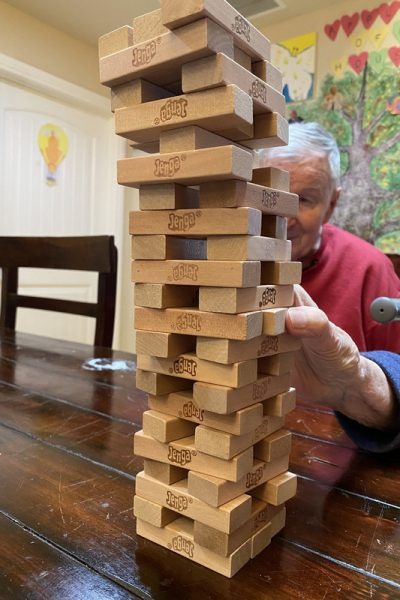
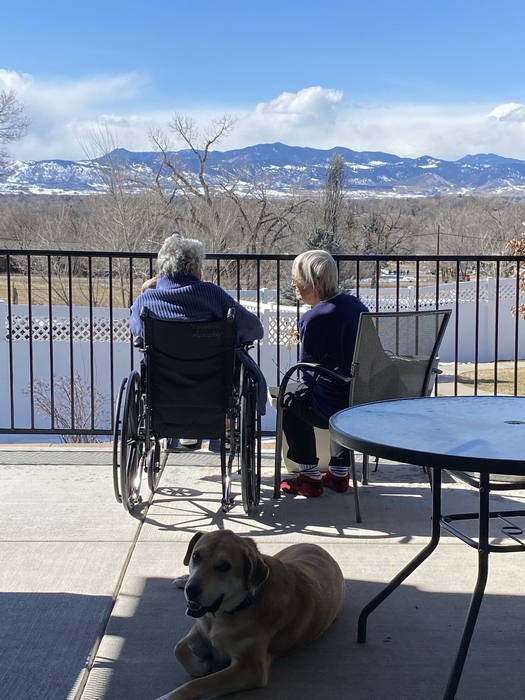
Our homes are small on purpose. Sixteen residents. A kitchen where somebody’s actually making dinner. A backyard people use. A couch. The dog comes by. I’m not telling you this is right for every family — it isn’t — but go tour one of each and pay attention to how you feel on the way out. You’ll know more than you think.
Get the numbers. Every place should be able to tell you, without hunting around, how many caregivers are on during the day, how many are on at night, and how many residents each one is responsible for. If they dodge this, that tells you something.
Nighttime is where it matters most, and nobody talks about it enough. That’s when wandering happens, when people get confused, when falls happen. If they’re thin on staff at night, you’ll feel the effects of that.
Then ask about training. Ask how long people have worked there. High turnover is a problem in memory care specifically, because the staff who know your mom are the ones who can tell when something’s a little off. Someone who’s been there two years reads her. Someone who’s been there three weeks can’t.
You want secure: doors that don’t just open onto a street, monitored exits, good lighting, floor plans that make sense. But you also don’t want it to feel like a facility in the bad sense. There’s a real difference between a home that’s safe and a place that feels locked down — and you pick up on it fast.
Outdoor space matters more than people think. Being able to sit in a yard, walk around without worry, get some sun — that’s not extra. That’s basic.
A lot of places phone this one in: bingo, a movie on Tuesday, some kind of craft thing once a week. Fine, but generic.
What really works is when activities connect to who the person actually is. A guy who worked on cars his whole life — give him something to tinker with and see what happens. A woman who gardened for 40 years — give her a raised bed, some tomato plants, a little trowel. Watch her face. Music from when someone was young is huge, and that’s not sentimentality — there’s actual research on it.
Ask what a week looks like. Ask how they find out what a specific person likes. If the answer is vague, it’s vague for a reason.
Here’s the real talk on location: the closer the home is to you, the more you’ll visit. I know what you’re going to say — you’ll visit no matter what, and you mean it, and I believe you. But life happens. Twenty minutes away becomes a weekly thing. An hour each way becomes a monthly thing. It just does. Plan accordingly.
Around Denver there’s a wide range. Central Denver has its own energy. Lakewood, Arvada, and Golden offer quieter neighborhoods, more trees, more of a settled feel. For folks who’ve lived out here a long time, the mountains on the horizon still look like home.
Nobody wants to have this conversation, but everybody has to.
Memory care in Colorado is priced all over the place — and the way it’s priced can be even more confusing than the numbers themselves. Some places give you one all-inclusive rate. Others have a base rate plus “care levels” that can push the monthly total up a lot as needs change.
Ask for everything in writing. Ask what’s included. Ask specifically what would make the price go up and by how much. Ask about long-term care insurance, VA benefits, and Medicaid — what they take, what they transition to, what they don’t.
A place that won’t be straight with you about money right now isn’t going to get clearer later. That’s just true.
Dementia progresses. We all know this. But families don’t always ask the next question: can this place keep caring for my person as things get harder, or are we going to end up moving them again?
Moves are rough. Every single transition is risky for somebody with dementia — new faces, new room, new hallway, new routines. Homes built around “aging in place” are designed so this is the last move. Ask directly what circumstances would cause someone to have to leave. Ask what extra services — like hospice, when the time comes — can come in so the person can stay put.
You don’t stop being family. You shouldn’t. A good home won’t want you to.
What you’re looking for is whether family involvement is real or whether it lives mostly on the website. Can you drop by without a phone call first? Are you part of care planning conversations, or are they just sent to you after? Can the grandkids come over on a Sunday? Do holidays actually happen in the home?
The small stuff says a lot. Honestly, more than the brochure does.
A few that tend to separate the places that really get it from the ones that are mostly just talking the talk:
Pay attention to how the answers come out. Rehearsed answers sound different from real ones. You’ll hear it.
Staff rushing around or distracted while you’re touring — and remember, they know you’re there. Residents who look zoned out or completely disengaged. Smells that aren’t “someone had an accident” but more “this is how this place always smells.” Pushback when you ask to see more of the home or come back unannounced. Vague answers about money. Obvious turnover.
And this one I can’t say enough: trust your gut. Sometimes you can’t put it into words but something feels off. That’s information. Don’t ignore it.
The rhythm is just different. Hard to explain until you’re there, but I’ll try.
Morning is slow. Breakfast happens in the kitchen and some residents help — cracking eggs, stirring something, setting the table. Some just sit and watch, and that’s fine too. Coffee is real coffee. Somebody’s feeding the fish. Somebody else is on the porch with a blanket.
Activities happen through the day but they’re not on a strict schedule. A music thing here. The dog comes by. Some residents making cookies. A short outing for whoever wants to go. Lunch is at a table together. Afternoons get quieter — lights get softer as the day goes, people rest who need to. Dinner, together again. Evenings wind down.
It’s a day in a house. Not a schedule on a wall.
Go tour places. Really. I can write a thousand more words and it won’t replace walking through a door. Look around. Talk to the staff. Say hi to residents. Notice how the staff talk to them, not to you. That’s the tell.
If you’d like to come see one of our homes, we have five of them around the Denver metro area — Arvada, Lakewood, Golden, and a couple of others — and you can come whenever works. Just reach out and we’ll set it up.
Go tour places. Really. I can write a thousand more words and it won’t replace walking through a door. Look around. Talk to the staff. Say hi to residents. Notice how the staff talk to them, not to you. That’s the tell.
If you’d like to come see one of our homes, we have five of them around the Denver metro area — Arvada, Lakewood, Golden, and a couple of others — and you can come whenever works. Just reach out and we’ll set it up.