Creating Moments, Capturing Memories

The Hidden Link Between Falls and Dementia Risk in Older Adults

The Link Between Falls and Dementia Risk in Older Adults

There is a link between falls and dementia risk that some doctors believe we might overlook.

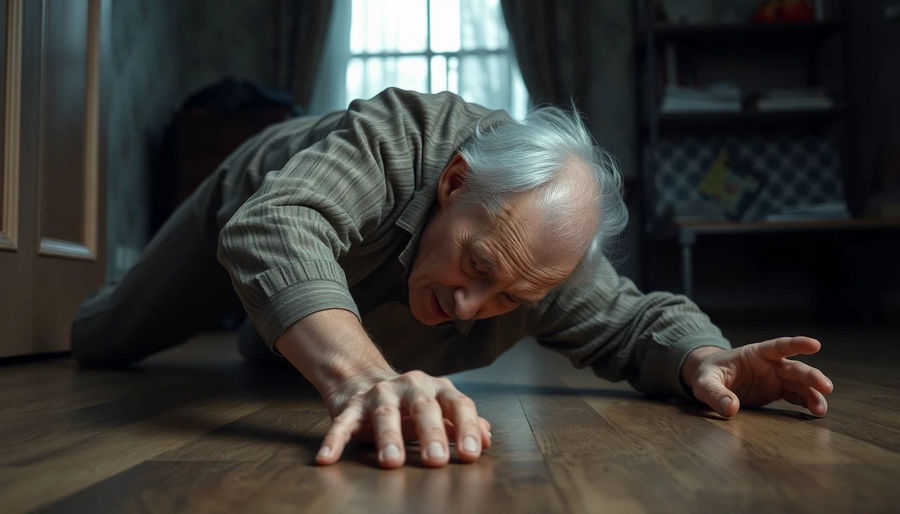
As your parents or grandparents age, you may worry about their physical safety – especially the risk of falls. But recent research suggests that falls in older adults could be more than just a physical danger.

They may also signal an increased risk of dementia down the road.

If you have a loved one over 65, understanding this connection could help you spot early warning signs and take proactive steps to protect their cognitive health.

Let’s explore what the latest science tells us about falls and dementia risk in seniors.

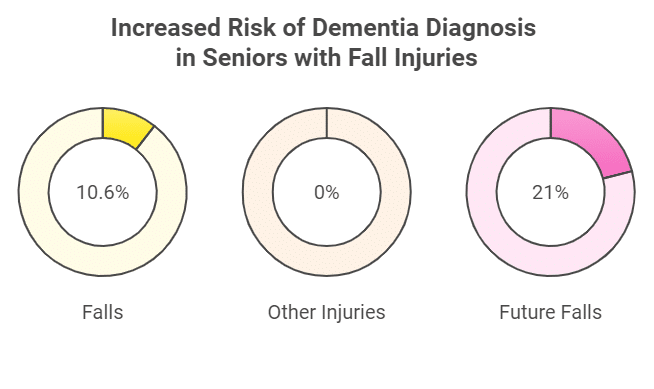
Increased Risk Of Dementia Diagnosis Inseniors With Fall Injuries

The Surprising New Findings

large study published in JAMA Network Open examined data from 2,453,655 Medicare patients who had experienced traumatic injuries. The researchers compared seniors who had fallen to those injured in other ways.

Their key finding? Older adults who were injured in falls had a 10.6% higher chance of being diagnosed with dementia within the following year, and 21% increased risk for future dementia diagnosis compared to those with other injuries.

At first glance, this statistic might seem alarming. But before you panic, it’s important to understand the nuances of what it means – and what it doesn’t.

A Two-Way Street

Dr. Molly Jarman, one of the study’s authors, describes the relationship between falls and dementia as “a two-way street.” This means the connection likely goes both ways:

  1. Cognitive decline can increase the risk of falls

  2. Falls may potentially accelerate cognitive decline

It’s a bit of a “chicken or the egg” situation. Were the seniors who fell already experiencing some mild cognitive impairment that made them more prone to accidents? Or did the trauma from the fall itself potentially speed up cognitive decline?

The study can’t definitively answer those questions. But it does highlight how falls could be an early warning sign of developing cognitive issues.

Why Falls Might Signal Cognitive Decline

Why Falls Might Signal Cognitive Decline

You might be wondering – how could a physical accident like a fall be related to mental decline? There are a few potential explanations:

  • Balance and coordination issues – Early cognitive decline can affect areas of the brain involved in balance, spatial awareness, and motor control. This could make falls more likely.

  • Judgment and risk assessment – Mild cognitive impairment might impair a person’s ability to recognize and avoid fall hazards.

  • Medication side effects – Some medications used to treat early dementia symptoms can increase fall risk as a side effect.

  • Brain trauma – While less common, severe falls resulting in head injuries could potentially contribute to cognitive issues.

What This Means for Your Loved Ones

If an older family member experiences a fall serious enough to require medical attention, it doesn’t automatically mean they’re destined for dementia. But it could be a sign that some cognitive screening is warranted.

Dr. Alexander Ordoobadi, the study’s lead author, emphasizes that “We treat the injuries, provide rehabilitation, but often overlook the underlying risk factors that contribute to falls despite a growing body of evidence suggesting a link between falls and cognitive decline.”

Early detection is key when it comes to managing cognitive decline. The sooner potential issues are identified, the more options there are for interventions that could slow progression.
Reduce Fall Risks In Seniors

Protecting Your Loved Ones

While you can’t prevent every fall, there are steps you can take to reduce risk and potentially safeguard cognitive health:

  1. Fall-proof the home – Remove tripping hazards, improve lighting, and install grab bars in key areas.

  2. Encourage exercise – Activities that improve balance and strength can reduce fall risk.

  3. Review medications – Some drugs can increase fall risk. Work with their doctor to assess if any adjustments are needed.

  4. Get vision checked regularly – Poor eyesight can contribute to falls.

  5. Consider cognitive screenings – Even without a fall, regular cognitive check-ups for seniors can catch issues early.

  6. Stay socially engaged – Social interaction and mental stimulation are linked to better cognitive health in aging.
Daughter Consoling Her Elderly Father

Conclusion - The Bigger Picture of the Link Between Falls and Dementia

Although there is a link between falls and dementia, it doesn’t seal anyone’s cognitive fate. Many seniors who fall never develop dementia, and many who develop dementia never experienced a serious fall.

This research simply highlights another potential early indicator of cognitive changes. By being aware and proactive, you can help ensure your loved ones get the support and care they need.

For more information on senior dementia care, contact Applewood Our House.

Share the Post: