Creating Moments, Capturing Memories

How Quickly Does Lewy Body Dementia Progress?

How Quickly Does Lewy Body Dementia Progress

Many families ask the same difficult question: How quickly does Lewy Body Dementia progress, and what should they expect?

Mary wakes up every morning bracing for the unknown. Some days, her husband greets her with a warm smile and clear words.

Other days, he mistakes her for a stranger or sees things no one else does.

She loves him deeply, but this shifting reality wears her down. She wonders: Is this how fast things are going to change?

That question haunts many families confronting Lewy Body Dementia (LBD).

This quick guide delivers clarity, so you’re not caught off-guard.

You’ll learn how LBD typically unfolds, what drives that timeline, and how to position yourself to deliver compassionate care without losing your own stability in the process.

What Makes LBD Progression Unique?

LBD is not linear. Unlike Alzheimer’s, which often follows a slow and steady decline, LBD is erratic. One day, your loved one may seem nearly back to normal.

Then out of nowhere, they’re confused, talking to someone invisible in the corner of the room. These moments hit hard. That kind of unpredictability wears families down fast.

Here’s what we do understand:

  • Average Duration: 5–7 years from diagnosis to end-of-life.
  • Faster than Alzheimer’s: Alzheimer’s typically spans 8–10 years. LBD often compresses the distress into a shorter window.
  • Wide Range: Some progress in just 2–3 years. Others, with strong support and good health, may live 10–20 years.

But numbers alone don’t serve you. What matters is what you can do with them.

Why Speed Varies – And What You Can Influence

You can’t control the biology, but you can control the timing of action, the quality of your care team, and how you respond.

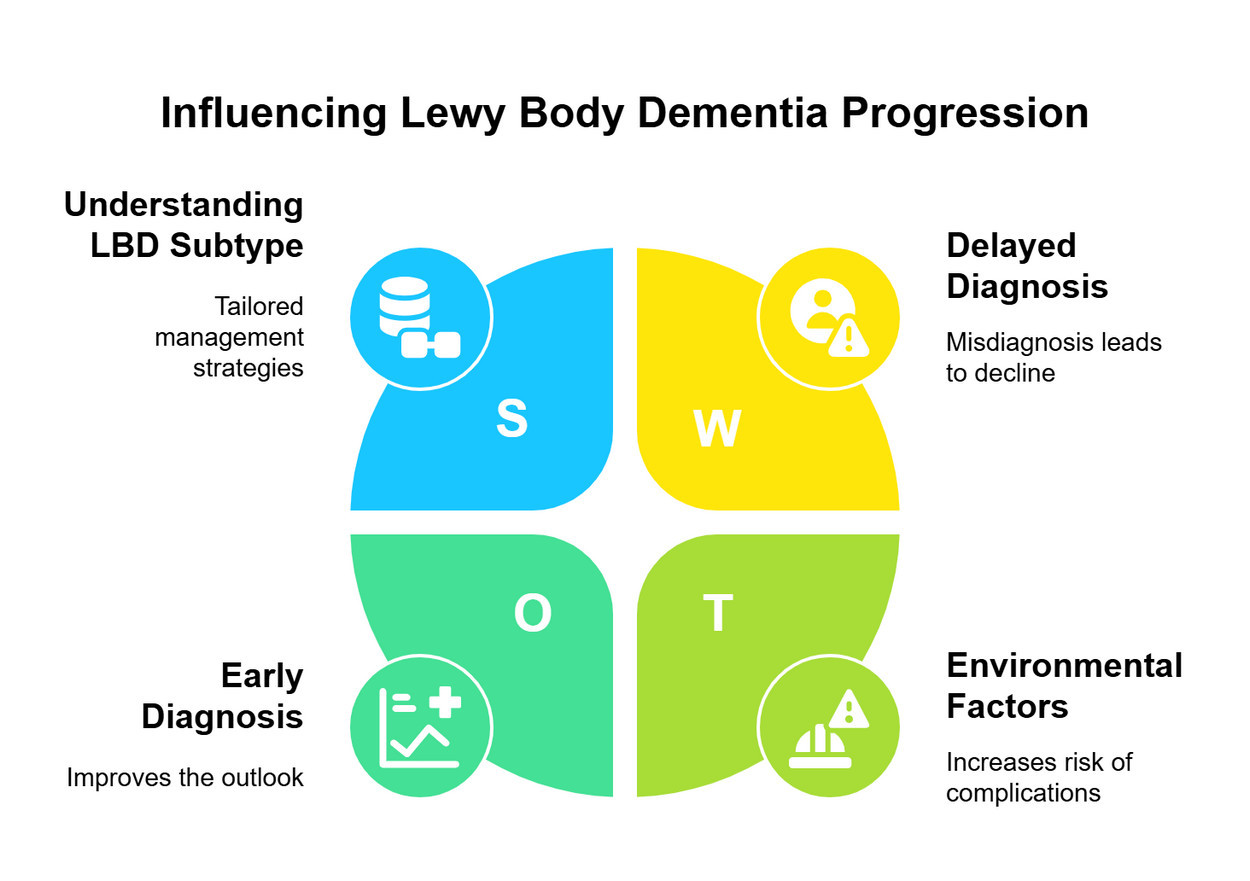
  1. Delayed Diagnosis Worsens Outlook
    LBD is often mistaken for Alzheimer’s, Parkinson’s, or even depression. The wrong treatment—or no treatment—can accelerate decline.
  2. Environmental Factors Multiply Risk
    Falls, infections, drug sensitivities: one bad event can set off a chain of setbacks. Every preventive step counts.
  3. Subtype Matters
    If cognitive symptoms come first, that’s Dementia with Lewy Bodies (DLB). If movement issues lead, it’s Parkinson’s Disease Dementia (PDD). DLB tends to move faster. Ask your doctor to clarify.
  4. Response to Treatment
    Some people benefit from rivastigmine or carbidopa-levodopa. Others decline rapidly regardless. Tracking reactions to treatment is essential—early missteps have long shadows.

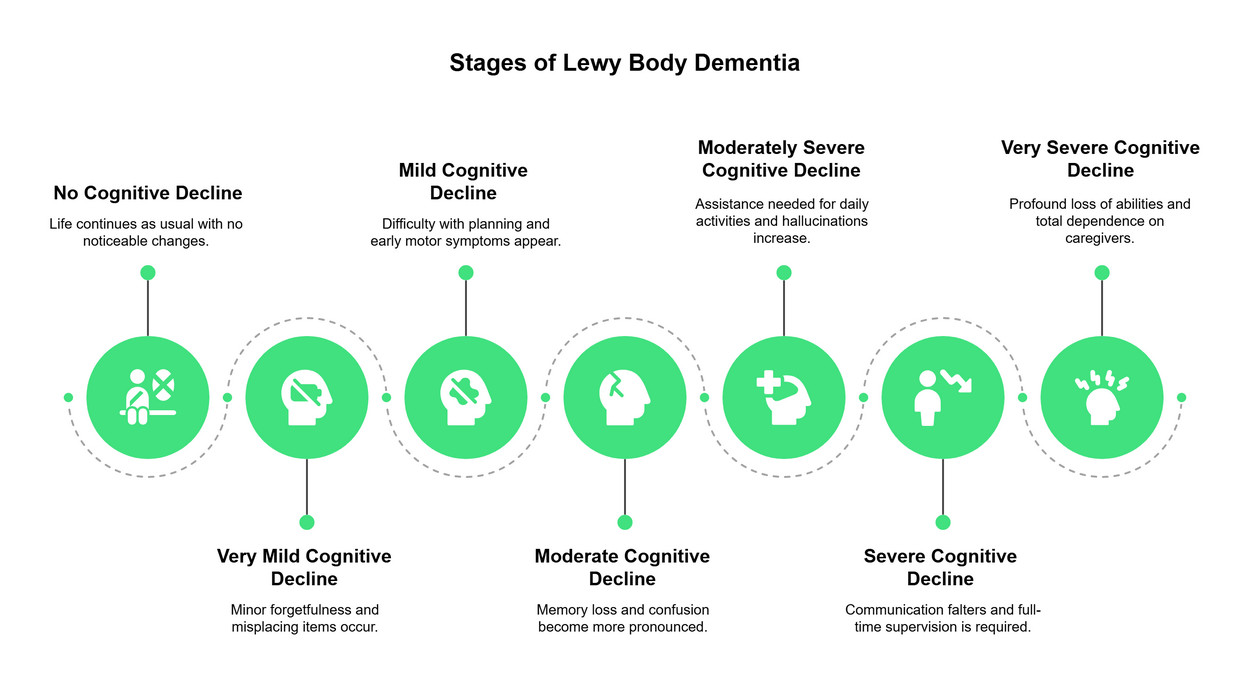
The Seven Stages of Lewy Body Dementia

Every family touched by Lewy Body Dementia faces a journey marked by uncertainty, heartbreak, and moments of unexpected grace.

For caregivers, understanding each stage of this condition is the first step toward reclaiming control and providing compassionate, strategic care.

Here’s a clear, actionable breakdown of the seven stages-crafted to empower you with knowledge and confidence at every step.


Stage I: No Cognitive Decline 


At this opening stage, life carries on as usual. There are no obvious memory lapses or behavioral changes.

The individual functions independently, manages daily routines, and maintains relationships without difficulty.

Underneath, subtle changes may be brewing, but they remain invisible to both loved ones and healthcare professionals.


Stage II: Very Mild Cognitive Decline 


Small slips begin to surface-occasional forgetfulness, misplacing everyday objects, or struggling to recall names.

These changes are often mistaken for normal aging and don’t disrupt daily life.

For families, this is a time to watch closely and start gentle conversations about any patterns you notice.


Stage III: Mild Cognitive Decline 


Now, the signs become harder to ignore. The person may have trouble planning, solving problems, or staying focused.

Tasks that once seemed effortless-balancing a checkbook, following a recipe, keeping appointments-start to require more effort.

Early motor symptoms like mild tremors or stiffness may appear, and visual hallucinations can begin, adding a new layer of complexity for caregivers.


Stage IV: Moderate Cognitive Decline 


This is a turning point. Memory loss and confusion become more pronounced, and the individual may struggle with complex tasks such as managing finances or remembering recent events.

Independence fades as reliance on others increases. Movement issues and behavioral changes, such as mood swings or increased anxiety, may also intensify.

At this stage, a formal diagnosis often becomes clear, and families may need to seek additional support.


Stage V: Moderately Severe Cognitive Decline 


The need for assistance grows.

The person may forget significant details about themselves, become disoriented to time or place, and require help with daily activities like dressing or bathing.

Hallucinations and delusions can become more frequent and distressing, both for the individual and those providing care.

Safety and supervision become top priorities.


Stage VI: Severe Cognitive Decline 


Communication falters. The individual may lose the ability to speak coherently or recognize loved ones.

Physical mobility declines, and full-time supervision is required.

At this stage, the person is almost entirely dependent on caregivers for all aspects of daily living, from eating to personal hygiene.

Emotional support for caregivers becomes as vital as physical care for the patient.


Stage VII: Very Severe Cognitive Decline 


This final stage is marked by profound loss. The person may lose the capacity to speak, walk, or even sit up without help.

Memory is almost completely gone, and basic bodily functions require total assistance.

Compassion, patience, and comfort become the cornerstones of care, as families focus on preserving dignity and quality of life in the face of overwhelming decline.


Every stage of Lewy Body Dementia presents new challenges, but also new opportunities for connection, advocacy, and support.

By staying informed and proactive, you can transform daunting obstacles into manageable steps-ensuring both your loved one and your family receive the care, respect, and hope they deserve.
Strategic Caregiving - Leverage, Not Sacrifice

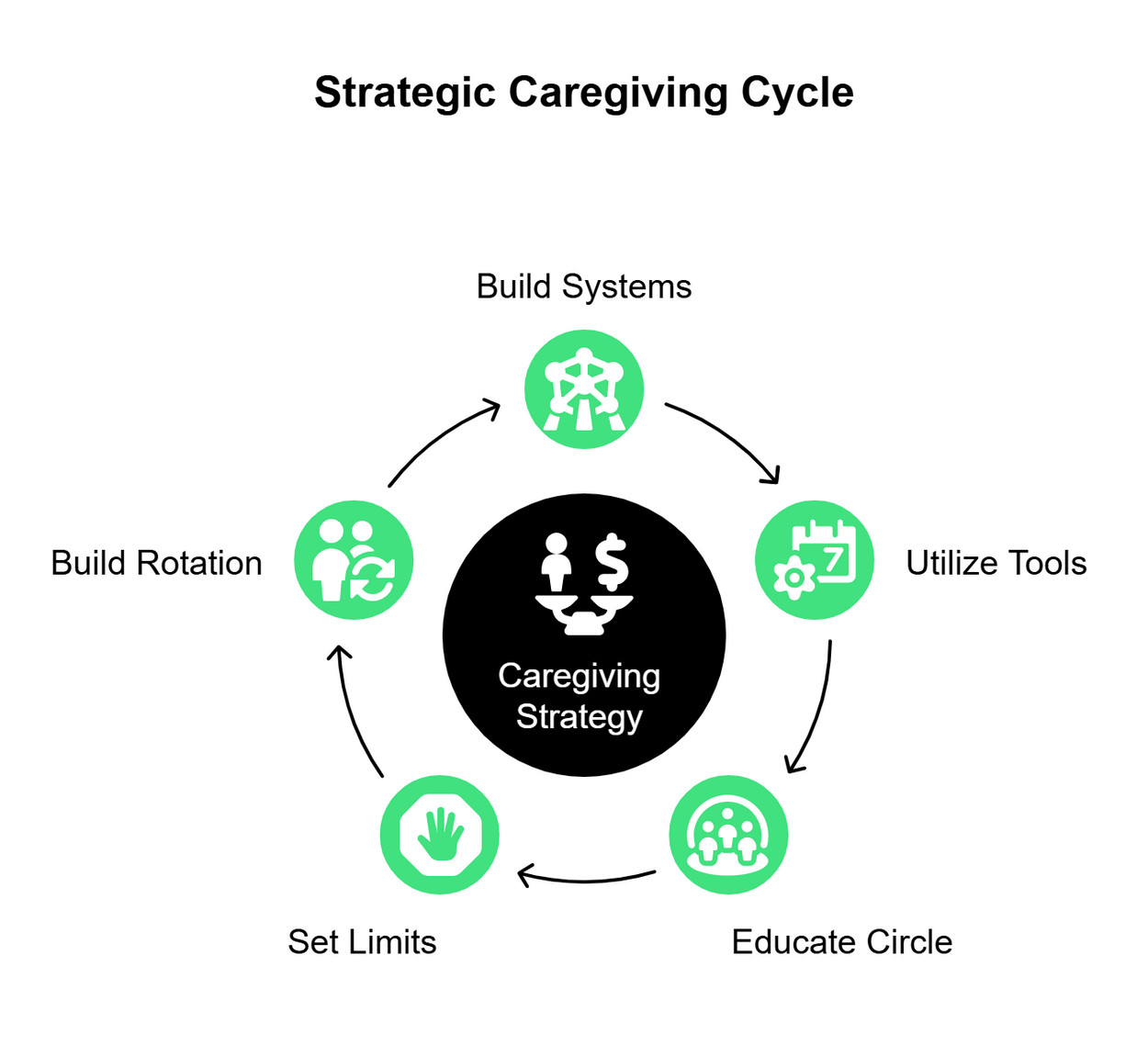
Don’t solve problems one at a time—solve them with systems. That applies here. You’re not just reacting to symptoms. You’re building a caregiving infrastructure.

  • Use logs, calendars, and alerts to track meds, symptoms, and routines.
  • Educate your circle: the more others understand, the more they can support.
  • Set personal limits: Say “no” when needed. Protect your bandwidth.
  • Build a rotation of relief: Neighbors, adult day care, paid help. Plan coverage like you would for a business.

Final Word on How Quickly Does Lewy Body Dementia Progress

Lewy Body Dementia can move quickly. But within that, there’s room for grace. For strategy. For dignity.

You are not powerless. You are the architect of your family’s care response. With the right moves (made early), you can improve outcomes, preserve your health, and find connection even in loss.

When confusion reigns, your preparation becomes the one thing that doesn’t falter.

Share the Post: