Creating Moments, Capturing Memories

Frontotemporal Dementia Tests – What No One Tells You Until It’s Too Late

What to Do if You Suspect FTD

Frontotemporal dementia tests are usually requested too late, or not at all.

“Dad Just Doesn’t Care Anymore.”

That’s what my cousin said after her father cracked a wildly inappropriate joke during dinner.

She didn’t know what to say. It wasn’t just a one-time thing.

He was forgetting to pay bills, leaving the stove on, and laughing at the wrong moments.

And not in a “he’s getting old” kind of way. Something was off.

That’s where it all started. Her family weren’t looking for a “diagnosis.” They were looking for a reason why someone they loved was becoming unrecognizable.

Turns out, that reason had a name: frontotemporal dementia.

What’s Actually Happening?

Let’s make this clear:

  • Alzheimer’s hits memory first.
  • Frontotemporal dementia (FTD) goes after your behavior, personality, and ability to make decisions—before memory is even touched.

When someone starts acting rude, impulsive, distracted, or disinterested in people… it might not be “just old age.”

This is what FTD looks like in real life:

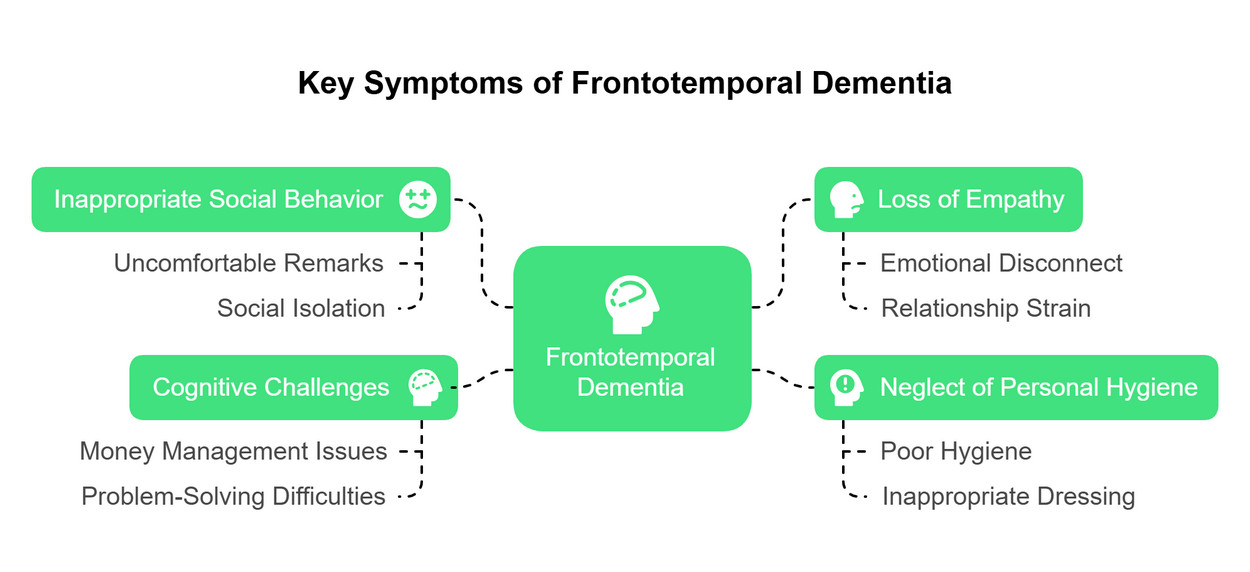
  • Saying things that make everyone uncomfortable (without realizing it)
  • Losing empathy—like they suddenly stop caring about how others feel
  • Ignoring personal hygiene or dressing completely inappropriately
  • Struggling with money, planning, or problem-solving

These are not “moods.” These are signs of brain degeneration in the frontal and temporal lobes.

The Problem is That FTD is Wildly Misunderstood

Doctors miss it. Families ignore it. The person going through it often doesn’t even know something’s wrong.

Here’s why:

  • Most people associate dementia with memory loss.
  • FTD doesn’t start with memory loss.
  • So, when someone acts out of character, we assume they’re being difficult. Not sick.

According to the Mayo Clinic:
“Some people with frontotemporal dementia have changes in their personalities… They become socially inappropriate and may be impulsive or emotionally indifferent.”

Translation? They say what they want. They do what they want. They don’t feel what they used to feel. And it’s not their fault.

With FTD, it’s the Tests That Matter

Here’s the thing…

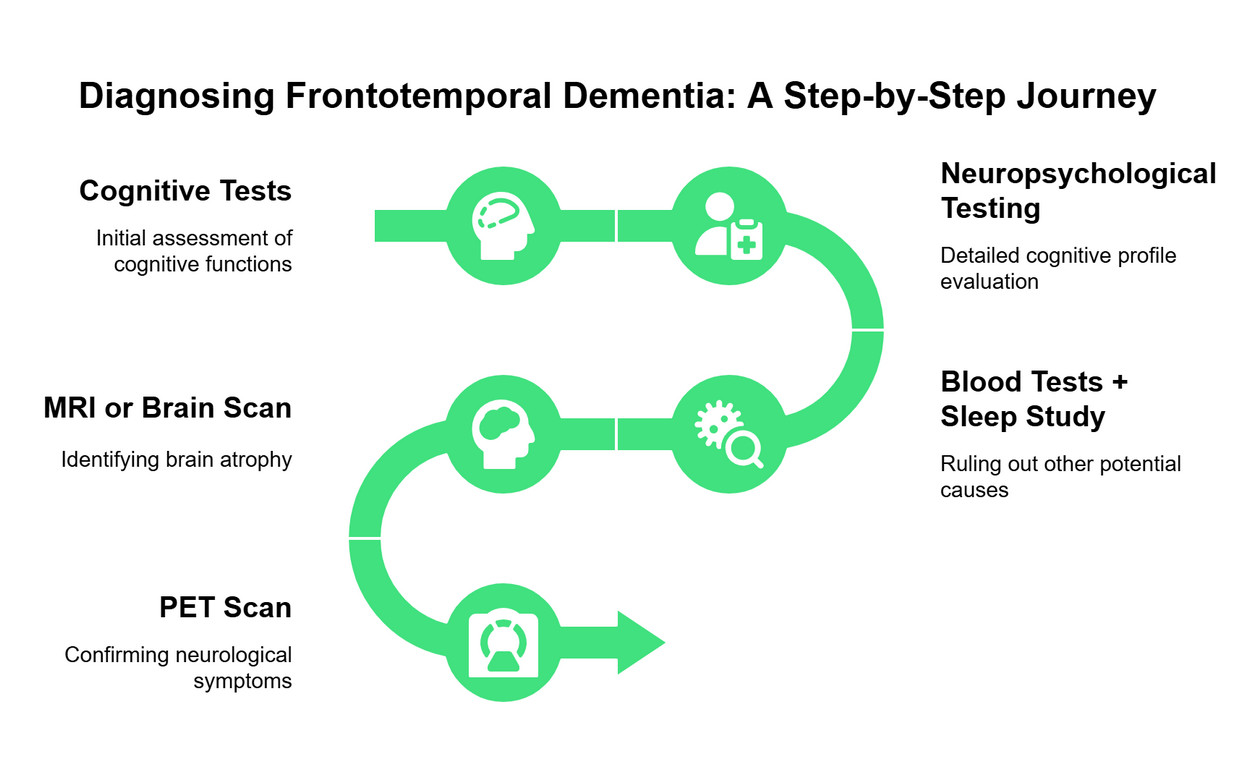
FTD isn’t diagnosed in one shot. It’s a process.

And the most important part? You have to ask for the right tests. Most primary care physicians will not catch this unless you push.

Step-by-Step Breakdown

  1. Cognitive Tests

These measure:

  • Attention
  • Executive function
  • Verbal reasoning
  • Short-term memory (to rule out Alzheimer’s)

What you’ll hear:

  • “Repeat these three words…”
  • “Draw a clock showing 10 past 11…”
  • “What day is it today?”

If the answers are scrambled or delayed, it’s a red flag. But that’s not enough.

  1. Neuropsychological Testing for FTD

This one takes hours. And it’s worth every second.

It gives a detailed cognitive profile. Not just “pass or fail.” It shows exactly which parts of the brain aren’t working the way they should.

Quote from MSD Manuals:
“Neuropsychological testing can help identify the specific pattern of cognitive decline typical of frontotemporal dementia.”

Ask for it by name. Don’t wait for them to suggest it.

  1. Blood Tests + Sleep Study

Why? To rule out other causes of behavior changes like:

  • Thyroid issues
  • B12 deficiency
  • Sleep apnea

Not glamorous. But necessary.

  1. MRI or Brain Scan for Frontotemporal Dementia

This is the turning point. With FTD, MRIs often show frontal and/or temporal lobe atrophy—literally brain tissue shrinking.

If the scan looks off, they’ll move forward with the next one…

  1. PET Scan for FTD

This one doesn’t show structure. It shows brain activity.

Low activity in certain brain areas confirms that the symptoms aren’t behavioral—they’re neurological.

A PET scan is like watching the brain on “night vision.” If the lights are dim in the frontal lobe, something’s seriously wrong.
Why This Diagnosis Matters

When they got the official call, the neurologist said:
“It’s behavioral variant frontotemporal dementia.”

That was the moment things got real. It wasn’t a phase. It wasn’t stress. It wasn’t her Dad being Dad.

It was his brain breaking down quietly and systematically.

Here’s what changed after her family knew:

  • They stopped getting angry and started getting support.
  • They got a social worker, a care plan, and therapy for my dad.
  • They applied for benefits early—because this disease moves fast.
  • And they stopped pretending he could “snap out of it.”

What to Do if You Suspect FTD

If your loved one is…

  • Saying weird things
  • Losing empathy
  • Acting impulsive or inappropriate
  • Struggling with basic planning or money

…you need to stop guessing and start testing.

Ask for this:

  • Cognitive screening

  • Full neuropsychological evaluation

  • MRI for brain structure

  • PET scan for brain function

  • FTD-specific diagnosis (not just “dementia”)

  • A referral to a neurologist who specializes in FTD diagnosis

Final Thoughts About Frontotemporal Dementia Tests

FTD will sneak up on you. It doesn’t look like memory loss at first. It looks like someone being rude, mean, or lazy. And that’s why families miss it.

But once you have frontotemporal dementia tests diagnosis, you can stop fighting the person and start fighting the disease.

Don’t wait until it’s too late.

If your gut says something’s off, you’re probably right.

Get the tests. Get the facts. Get ahead of the disease.

Share the Post: